Why Kallang Is a Strategic Location for Food Production and Distribution in Singapore
- Marc Singh
- Mar 16
- 4 min read


When food businesses evaluate production locations in Singapore, the conversation often defaults to square footage and rent per square foot. But for operators who run central kitchens, food distributors, or shift-based production facilities, location is not a real estate metric — it is an operational strategy.
The question is not simply 'where is the cheapest space?' but 'where can I distribute fastest, hire most efficiently, and respond to supply chain disruptions with the least downtime?' For these operators, a city-fringe location like Kallang often makes the difference between a smooth daily operation and one that haemorrhages time, cost, and staff retention.
What City-Fringe Actually Gives You in Day-to-Day Food Operations
Faster Last-Mile Distribution — Compounding Daily
For a central kitchen supplying multiple restaurant outlets or a food distributor servicing corporate catering clients, every delivery trip matters. A location that cuts 8–10 minutes off each round trip — across 12 to 15 deliveries per day — saves over an hour of driver time daily and reduces vehicle wear, fuel costs, and delivery variability. Over a year, that is a material operational saving that a further-out location simply cannot match.
More Reliable Deliveries for Time-Sensitive Customers
Food businesses serving corporate catering, retail F&B operators, or institutional clients operate on strict timing windows. A 30-minute traffic disruption from a fringe location can cascade into missed delivery slots and service failures. City-fringe locations reduce variability because journeys are shorter and less exposed to long-haul expressway congestion.
Better Manpower Access for Shift-Based Operations
Shift-based food production — early morning prep, split shifts, late-night processing — depends on staff being able to commute reliably at non-standard hours. MRT access and bus connectivity matter enormously for operations that run at 5am or 10pm. A city-fringe location with strong public transport links reduces absenteeism, expands your hiring pool, and reduces the wage premium you need to pay to attract staff to inconvenient locations.
A Denser Supplier and Service Ecosystem
Food operations depend on responsive supply chains — fresh ingredient delivery, equipment repair, packaging supply, cold chain services, and pest control. A central location compresses response times from suppliers and service providers. When a blast chiller fails or a critical ingredient needs emergency sourcing, being 10 minutes from multiple supplier zones versus 35 minutes can determine whether you make your production run or miss it.
Why Food Businesses Feel Location Differences More Acutely Than Other Industries
Most industrial businesses can tolerate some logistics inefficiency — the impact of an extra 20 minutes per delivery is absorbed across lower-volume, higher-margin operations. Food businesses cannot. Central kitchens and distributors often operate on thin margins, high volumes, and time-sensitive delivery windows where minutes of friction per trip translate directly into overtime costs, spoilage, and service failures. Location is a cost driver, not just a convenience.
The Investor Angle: Why Centrality Strengthens Rental Demand
For investors in food factory units, the operational calculus above translates directly into tenant quality and retention. Food operators who genuinely depend on city-fringe logistics for their daily operations do not vacate when their lease expires — they renew, because the cost of relocating a functioning food production operation to a more distant location is prohibitive. Central locations attract operators for whom the building is a working requirement, not merely a convenient one.
Why Kallang Makes Operational Sense
Kallang sits at the intersection of several of Singapore's major expressways and is served by multiple MRT lines within walkable or short transport distance. For food businesses, this means:
Distribution reach: short, reliable drives to all major Singapore regions — East, West, North, and Central — without relying on a single expressway corridor
Manpower pool: strong MRT connectivity supports recruitment of production staff at all shift hours
Supplier proximity: close to established food ingredient districts, cold chain logistics operators, and commercial kitchen equipment suppliers
CBD proximity: ideal for operators serving corporate catering, hotel supply, and high-end F&B clients in the Central Business District
Gourmet Xchange: Kallang's Purpose-Built Food Production Hub
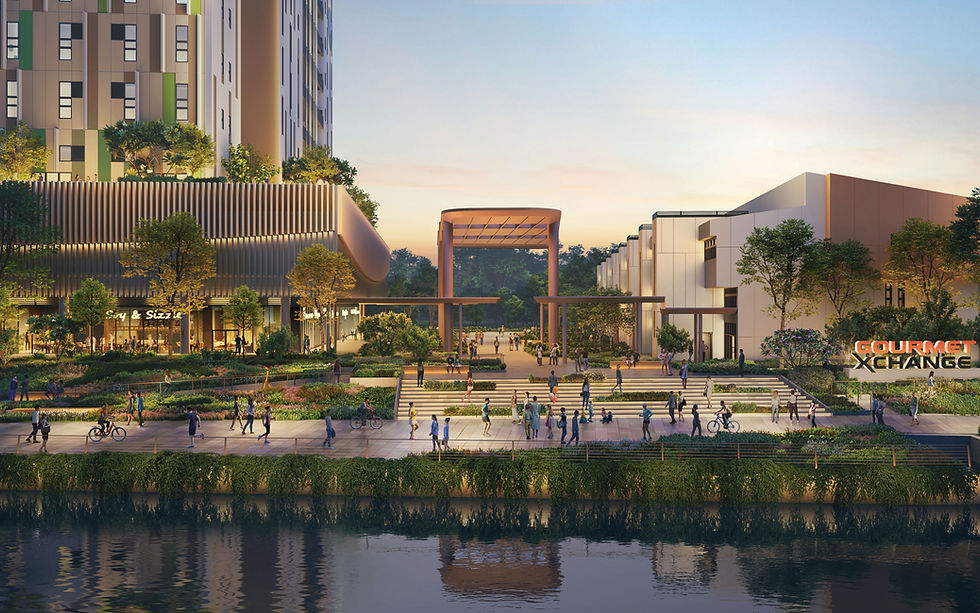
For food businesses evaluating city-fringe production locations, Gourmet Xchange at 1 Kallang Way offers both the location advantage described above and a purpose-built infrastructure specifically designed for food production operations.
Approximately 10 minutes by car to the CBD and 14 minutes to Orchard Road — well within the distribution window for time-sensitive deliveries
Approximately 18 minutes to Changi Airport — important for businesses supplying airline catering or handling imported ingredients
PIE, CTE, KPE, and ECP expressway access — enabling reliable multi-directional distribution without bottlenecking on a single route
Walkable to Mattar MRT (Downtown Line) and near Geylang Bahru and MacPherson MRT stations — supporting staff commuting at all hours
264 strata-titled food factory units across a purpose-built 474,800 sq ft site — creating a dense supplier and peer ecosystem within the development itself
All driving times are indicative based on developer marketing materials and normal traffic conditions.
If you are assessing whether Kallang fits your operational footprint — distribution geography, staff commuting patterns, or supplier access — contact Gourmet Xchange to arrange a unit viewing and discuss which floor levels and unit types best match your delivery vehicle type and daily operational pattern.
Disclaimer: Information is provided for general reference and educational purposes. Project details are based on developer marketing materials available at the time of writing and may change. Driving times are approximate. Please refer to the definitive sale documents and relevant authorities' requirements for final terms, specifications, and approvals.


Comments