Why Ramp-Up Access Can Matter More Than a Fancy Lobby


In many property sectors, the lobby gets the attention. Developers spend heavily on arrival experience, lighting, marble, branding walls and landscaping. These things matter in offices, hotels and luxury residences. But in a food factory, the most important design feature may be far less glamorous. It may be the ramp.
Why Logistics Is Not a Small Detail
Food businesses do not only need space. They need movement. Flour, oil, frozen goods, cartons, beverages, packaging, trays, machines, waste and finished products all have to move in and out. When access is poor, every movement becomes slower and more labour-intensive. A business may end up spending more time waiting for lifts, coordinating loading bays, moving goods through shared corridors or working around building restrictions. That friction may not show up in the rental rate, but it shows up in manpower cost, delivery timing and daily frustration.
The Hidden Premium of Efficient Access
A well-designed ramp-up facility reduces friction. It supports better loading, better dispatch and more efficient operations. For food businesses dealing with volume, catering, central production or distribution, this can be a major operational advantage. This is also why investors should care: operationally efficient units attract a deeper tenant pool. If a unit saves time and improves workflow, it may be more defensible than a unit that merely looks presentable but creates daily inefficiency.
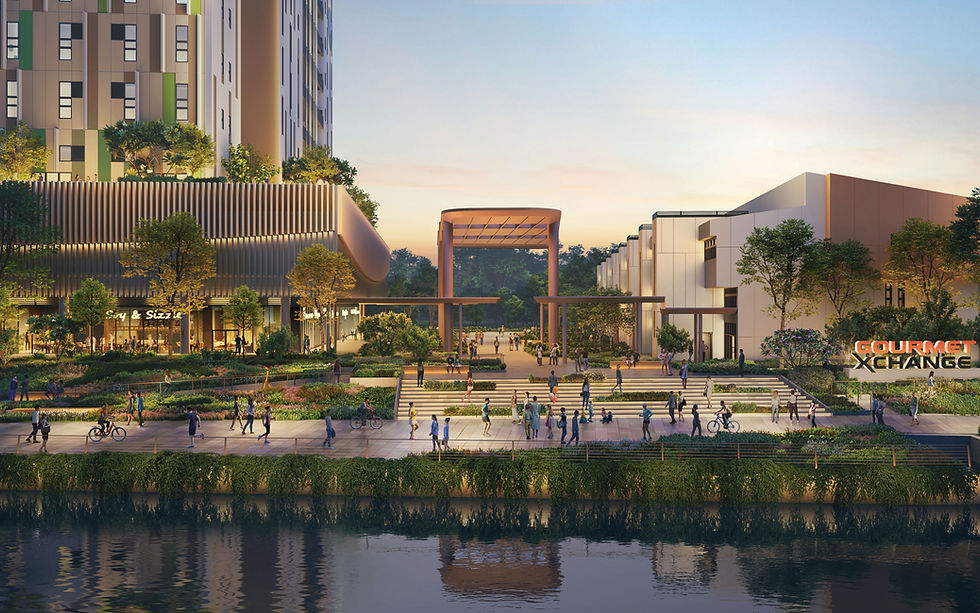
Gourmet Xchange has been positioned as a purpose-built food development, not a generic industrial building. Its ramp-up food factory concept recognises that food production is a logistics business as much as it is a cooking business. 40-footer container trucks can access Storeys 1 to 3; 24-footer rigid-frame trucks access Storeys 4 to 9. A central kitchen does not succeed only because the food is good. It succeeds because ingredients arrive on time, production runs smoothly, and drivers can collect efficiently. Contact us to see how the building's design supports your daily operational rhythm.
The Real Lesson
The best industrial design is often invisible to the customer. But to the operator, it can be the difference between a space that merely houses the business and a space that helps the business scale. In food production real estate, beauty is useful only if function is already solved. A fancy lobby may impress visitors. Ramp-up access helps the tenant operate better every day.


Comments