Why Singapore Shophouses Remain So Sought After — and Why Transaction Volumes Have Fallen

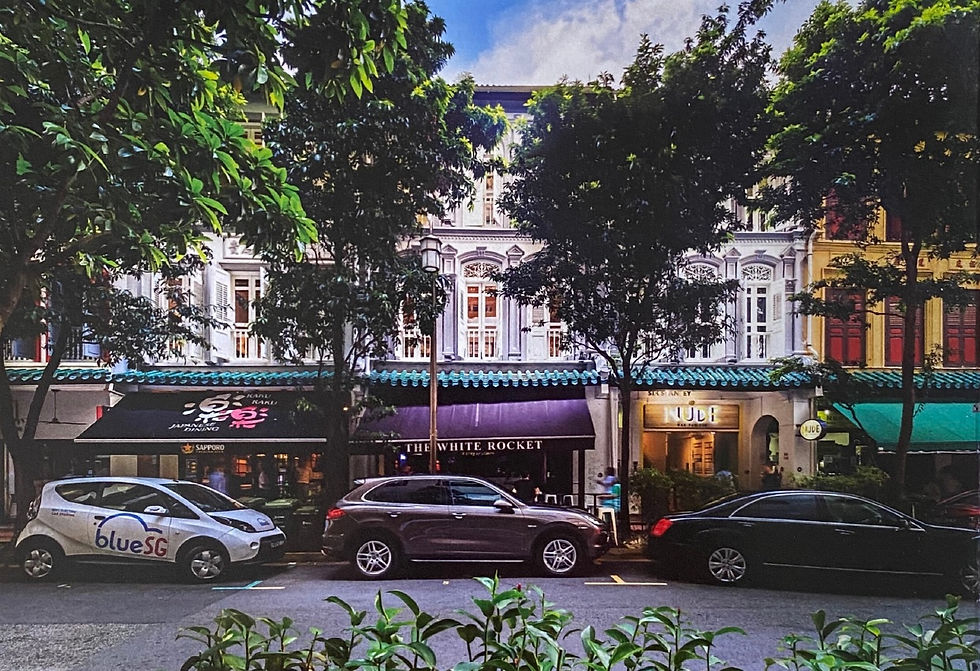
There are roughly 6,500 conservation shophouses in Singapore. That figure has not meaningfully changed in decades. It cannot change — once a building is gazetted for conservation by the Urban Redevelopment Authority, it cannot be demolished or significantly altered. This is not a coincidence. It is a supply constraint by design. And supply constraints, in real estate, have a way of making everything interesting.
For much of the last decade, Singapore shophouses were among the most coveted alternative property assets in Asia — attracting family offices, private wealth managers, boutique hotel operators, high-net-worth investors, and institutional funds. Transaction volumes surged to a peak of 245 deals worth $1.8 billion in 2021. The combination of freehold tenure, no Additional Buyer's Stamp Duty (ABSD), conservation character, dual-use commercial and residential potential, and Singapore's stable regulatory environment made them almost uniquely compelling.
Then something changed. And it is worth understanding exactly what.
The Volume Drop: What the Data Says
According to a December 2025 report by ERA Singapore, the landed shophouse market recorded just 70 transactions worth approximately $516 million across the whole of 2025 — a decade low that stands in sharp contrast to the 2021 peak. The most recent data is even more sobering: PropNex Research reported in May 2026 that shophouse sales in Q1 2026 slumped to levels not seen in nearly three decades, with cautious sentiment, geopolitical uncertainty, and a pricing mismatch between buyers and sellers weighing on activity. Leasing volumes also fell to a six-year low in the same period.
This is a significant cooling — but it requires careful interpretation. The headline transaction numbers almost certainly undercount actual activity, because a substantial proportion of shophouse deals are executed through Special Purpose Vehicles (SPVs) or share transfers that do not generate caveats. The real picture is less dire than the registered figures suggest. But the direction is clear: this is a market that has moved from exuberant to considered.
Why Transactions Have Fallen: The Real Reasons
1. The Tightest Holders in the Market
Conservation shophouses have quietly shifted into the hands of their most committed owners. Family offices, private wealth vehicles, institutional funds, and long-term investment holding structures have accumulated a significant share of the island's shophouse stock over the past decade. These buyers did not purchase shophouses to flip them on a two-year cycle. They purchased them as generational wealth vehicles, anchor assets within diversified portfolios, or long-term estate planning instruments.
When the seller pool is composed primarily of committed long-term holders, transaction volume naturally compresses. The supply of motivated sellers is thin — not because prices are weak, but because many owners have no compelling reason to sell.
2. The Yield Compression Problem
Singapore shophouse yields have come under sustained pressure. Prime conservation shophouses in the CBD transact at $5,500 to $8,000 per square foot. Gross rental yields for commercial shophouses typically run at 3 to 4 percent; residential shophouse yields are often lower still at 1.5 to 2.5 percent. In an environment where investors have access to Singapore Government Securities, investment-grade bonds, and other asset classes yielding 3 to 4 percent with significantly lower risk and capital requirements, the risk-adjusted case for shophouse investment has become harder to make on yield grounds alone.
This has dampened enthusiasm from the broader investor universe — particularly from buyers who acquired shophouses during the low-interest-rate era hoping for meaningful rental income alongside capital appreciation. Capital appreciation has broadly materialised; the income return has been more modest.
3. Elevated Prices Create a High Bar for New Buyers
The same price appreciation that has rewarded long-term holders has raised the entry cost for incoming buyers. A conservation shophouse in a prime district now requires meaningful capital — often $8 million to $20 million or more for a well-located unit in good condition — before restoration costs, renovation budgets, and ongoing maintenance are factored in. At those price points, the buyer pool narrows to family offices, ultra-high-net-worth individuals, and institutional capital. The wider investor market that fuelled volume growth in 2019 to 2021 has largely stepped back.
4. Regulatory and Scrutiny Environment
Singapore's financial regulators have also raised scrutiny of certain shophouse transaction structures, including some SPV-based deals where beneficial ownership was less than fully transparent. This has not dampened the legitimate investor market, but it has added friction for certain types of buyers and made the compliance bar higher across the board.
Why Shophouses Remain Deeply Attractive Despite Lower Volume

A slowdown in transaction volume is not the same as a deterioration in fundamental value. The case for shophouse ownership remains compelling for the right buyer.
Zero ABSD: Unlike residential property, shophouses carry no Additional Buyer's Stamp Duty for any buyer category — Singapore Citizens, Permanent Residents, foreigners, and companies alike — making them one of the only Singapore property categories with a clean acquisition cost structure for international buyers
Absolute scarcity: With only approximately 6,500 conservation units islandwide and no new supply possible, the stock is permanently finite. Scarcity does not guarantee appreciation, but it creates a structural floor beneath pricing
Freehold and long-tenure dominance: 86.1% of shophouse transactions in 2H 2025 involved freehold or 999-year leasehold assets. In a city-state where land is finite, perpetual ownership of a conservation asset carries genuine long-term value
Dual commercial and residential use: Conservation shophouses often permit a combination of commercial use on the ground floor with residential above, offering flexibility in how the asset generates income and adapts to changing use patterns
Cultural capital and identity: A conservation shophouse is not simply a building. It is a piece of Singapore's architectural and social heritage — a quality that cannot be replicated by new construction and that appeals strongly to buyers seeking assets with character, story, and permanence
Who Is Buying Now — and Why
The buyers who remain active in today's shophouse market tend to share certain characteristics: long investment horizons, capital that is not dependent on leverage, a preference for wealth preservation over short-term yield maximisation, and an appreciation for the non-financial attributes of the asset. Family offices feature prominently, as do private trusts and institutional real estate funds making selective long-duration acquisitions.
As ERA Singapore CEO Marcus Chu noted in the December 2025 report, Singapore's political stability, strong currency, competitive tax regime, and capacity to attract long-term capital continue to drive demand for shophouses as capital preservation and appreciation vehicles. ERA has forecast a recovery in transaction volumes in 2026, projecting 70 to 80 deals amounting to $550 million to $650 million as portfolio rebalancing and asset recycling bring more supply to market.
The Bottom Line for Investors
Singapore shophouses are not a momentum trade. They never really were, despite how they were sometimes discussed during the 2019 to 2021 boom. They are long-duration assets for long-horizon investors — vehicles through which the right owner can combine capital preservation, generational wealth transfer, lifestyle utility, and the quiet satisfaction of owning a piece of Singapore's irreplaceable built heritage.
The lower transaction volumes of 2025 and early 2026 reflect market maturation, not market failure. The stock has moved into the hands of its best owners. The buyers who remain are the ones with the clearest sense of why they want to own.
If you are considering a shophouse acquisition — whether as a family office looking to anchor a Singapore portfolio, a private investor seeking a freehold conservation asset, or a business owner evaluating the commercial and lifestyle case — the conversation is worth having before the market tightens again.
Disclaimer: Information provided is for general reference and educational purposes only. Transaction data cited is sourced from ERA Singapore Research (December 2025) and PropNex Research (May 2026). Property decisions should be made with independent professional advice.


Comments